Bitcoin's strongest hands are getting stronger. On-chain data published Monday shows the number of elite wallets holding more than 10,000 BTC has climbed to 90 — a six-month high — building on an earlier wave of accumulation by mid-sized whales. And the trend didn't pause for any of this summer's scares.
If you follow the headlines, this summer has been full of reasons to worry: a major hardware wallet exploit, a stalled regulatory bill, and the kind of low-volatility compression that makes short-term traders nervous. But the wallets holding the most Bitcoin don't trade on headlines. They've been quietly accumulating through all of it.
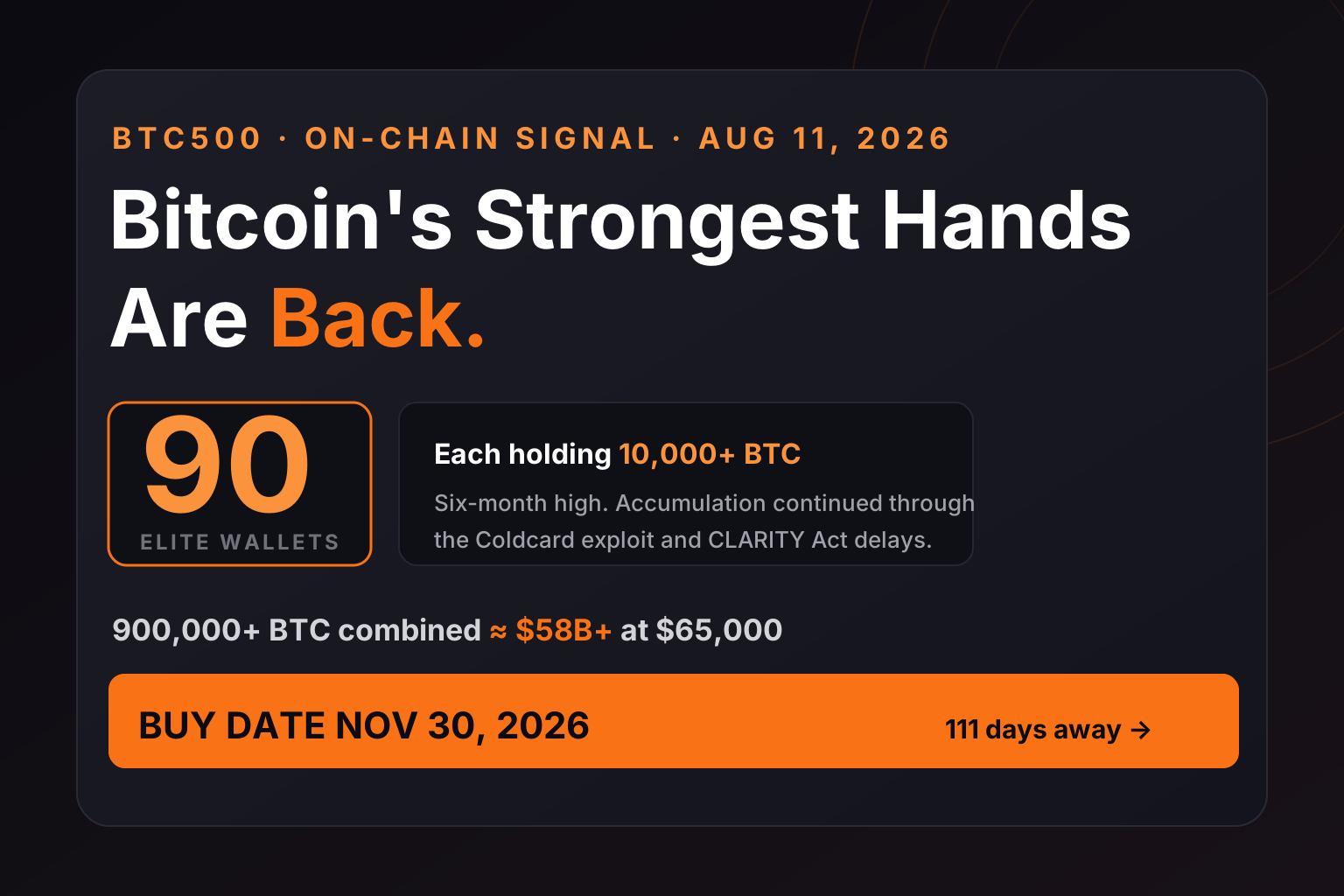
Key takeaway: The count of elite wallets holding 10,000+ BTC just hit a six-month high of 90. That's the most patient, least reactive cohort in Bitcoin — and they kept accumulating through the Coldcard exploit and the CLARITY Act delay. The signal is accumulation, not panic.
What the data actually shows
The headline number is simple: 90 wallets, each containing more than 10,000 BTC. That is a six-month high, according to on-chain data reported by CoinDesk on August 11, 2026. These are the wallets on-chain analysts often call the “strongest hands” — the cohort that holds through volatility, sells last, and tends to accumulate aggressively during periods of market uncertainty.
Do the math: 90 wallets times 10,000 BTC equals a combined floor of 900,000 BTC. At the current price around $65,000, that's north of $58 billion in value controlled by a tiny sliver of the network. These wallets represent far less than 0.1% of all Bitcoin addresses, yet they hold a disproportionate share of total supply.
The data also confirmed what on-chain analysts had been tracking for weeks: the accumulation didn't start with the big wallets. Mid-sized whales — those in the 1,000-to-10,000 BTC range — had already been building positions earlier in the summer. The large wallets appear to be following the same pattern, which is exactly how smart-money accumulation tends to ripple outward: mid-sized players move first, and the biggest wallets confirm the trend.
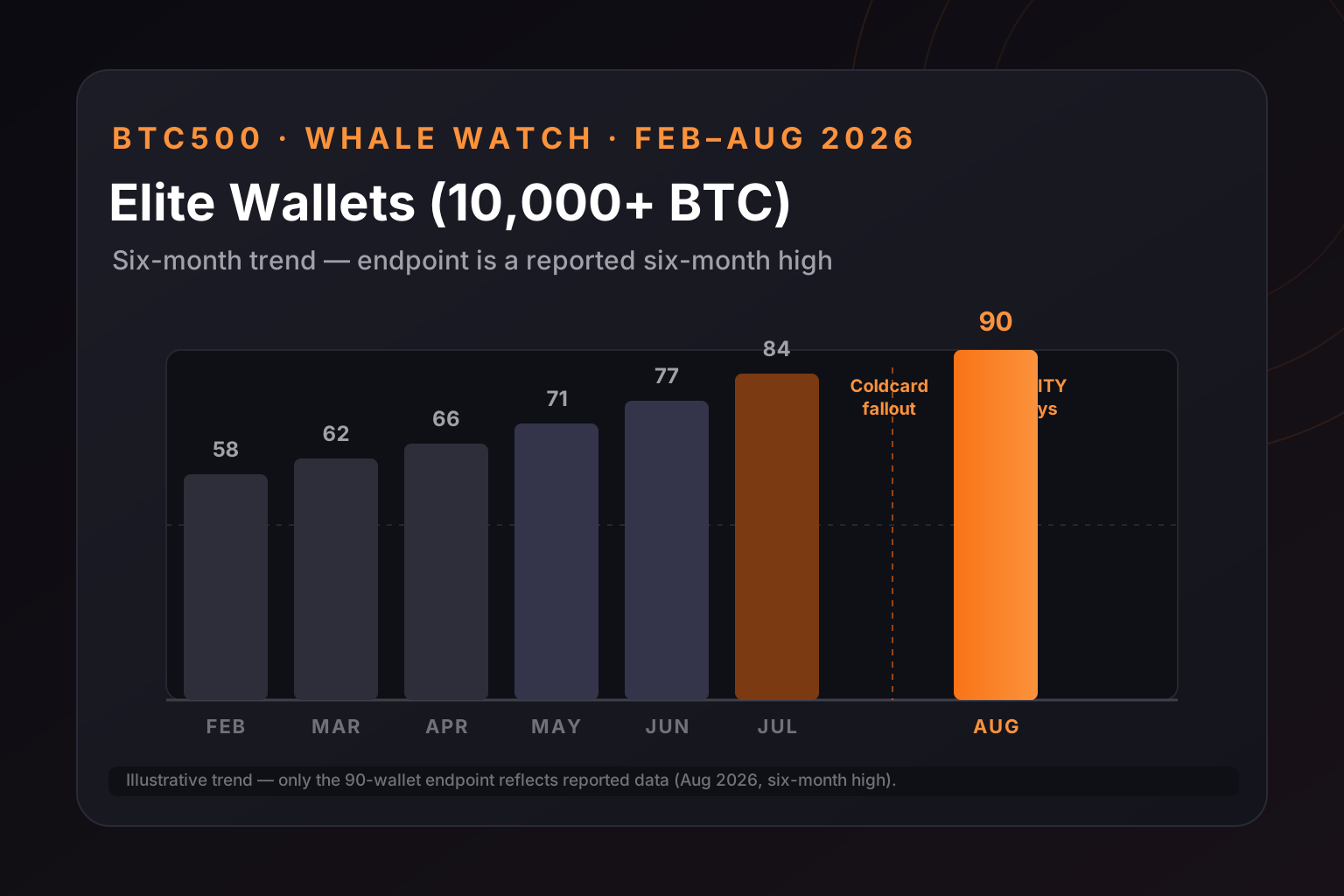
Accumulating through the noise
If you were reading crypto Twitter this summer, you might have thought the sky was falling. The Coldcard seed-generation vulnerability — a flaw that potentially exposed funds across an estimated 1.4 million wallets — dominated headlines for days. Shortly after, the CLARITY Act, the most important pending crypto regulation in the US, was punted past the August recess without a procedural vote, creating another round of “the government doesn't get it” anxiety.
Neither event stopped the accumulation.
That's the key insight. When mid-sized and large Bitcoin holders keep buying through a security scare and a regulatory delay, they're telling you something about their time horizon. They're not trading the next two weeks. They're positioning for the next two years.
This is not unique to this cycle. In every prior halving cycle, the wallets that accumulated the most aggressively in the 12-to-18 months before the halving were the ones that captured the largest gains in the 12-to-18 months after it. The pattern is well documented: strong hands buy the uncertainty, weak hands sell the headlines, and the halving cuts new supply in half regardless.
What this says about the cycle
Bitcoin's next halving is projected for April 13, 2028, at block height 1,050,000. That event will cut the block reward from 3.125 BTC to 1.5625 BTC, halving the rate at which new coins enter circulation. It is the single most predictable supply shock in any major asset class.
The BTC500 strategy is built around that event. The official buy date is November 30, 2026 — exactly 500 days before the projected halving. From today, that's 111 days away.
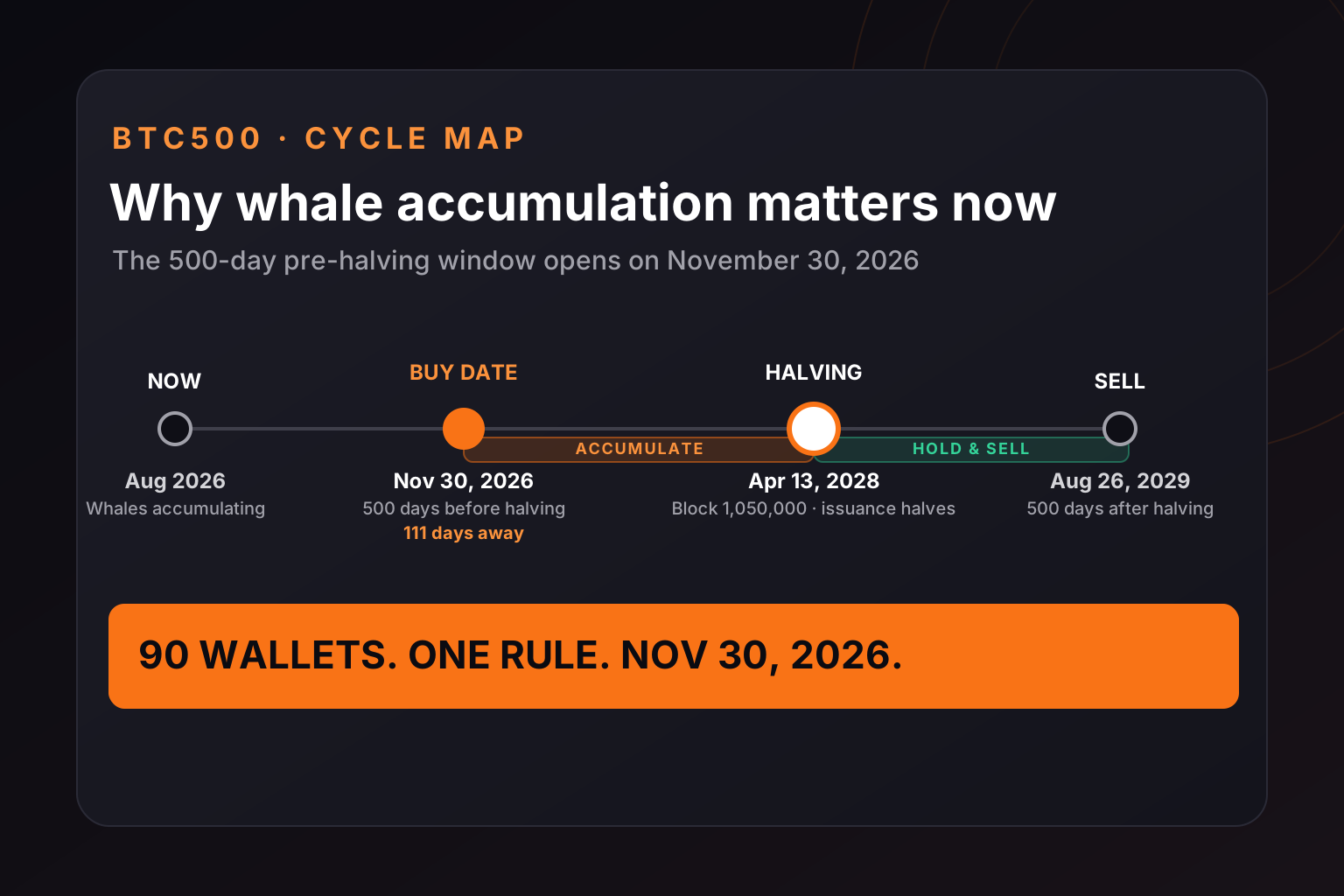
What the whale accumulation tells us is that the smartest, most patient capital in the market is building positions now — 111 days before the official buy date. This is not unusual: whale accumulation tends to intensify in the 12-to-18 months leading into a halving. The BTC500 rule doesn't try to front-run or match whale timing. It picks one date, sticks to it, and ignores the noise in between.
That's the real advantage of a fixed-date strategy. Whales have sophisticated on-chain analytics, dedicated research teams, and billions in capital to deploy on their preferred timeline. A rules-based investor has something just as powerful: a calendar, a plan, and the discipline not to deviate from it.
What it does NOT mean
It's tempting to read a whale accumulation headline and reach for the buy button. Don't. A few things worth keeping in mind:
- On-chain data lags. Wallet analytics show what happened, not what will happen. By the time a trend is reported in the media, the smartest money may already be rotating, hedging, or simply pausing.
- Whale accumulation is not a price prediction. Elite wallets accumulate because they have a long-term thesis on Bitcoin supply scarcity, not because they know what happens next quarter. Accumulation can continue for months before a price response, or it can coincide with a further drawdown.
- Whales can sell too. The same wallets that accumulate can distribute. On-chain data gives you a snapshot, not a guarantee. The reason the BTC500 rule works is that it doesn't depend on interpreting these signals correctly.
- It's one data point among many. ETF flows, corporate treasuries, miner behavior, and macro conditions all play a role. Whale accumulation is a useful signal — it is not the only signal.
How a rules-based investor should think about it
If you're following the BTC500 strategy, whale accumulation news should make you feel more confident in the approach — not more tempted to change it.
The strongest hands in the market are accumulating ahead of the halving. That's the same window the BTC500 buy date targets. The difference is that whales pick their own entry points based on on-chain analysis, macro conditions, and proprietary research. You pick one date — November 30, 2026 — and let the calendar do the work.
The bottom line on whale accumulation: Ninety elite wallets now hold 10,000+ BTC each, a six-month high. They accumulated through security scares and regulatory delays. That behavior tells you the smart money sees a multi-year opportunity. The BTC500 rule captures the same opportunity with one fixed date, no analysis required. 111 days to go.
See you in 111 days.
Nov 30, 2026 — the official BTC500 buy date
Check the live halving countdown, run the numbers on the investment simulator, and review every cycle on the timeline.
FAQ
What are Bitcoin's “strongest hands”?
“Strongest hands” refers to the wallets and holders who accumulate Bitcoin and hold it through volatility, drawdowns, and bear markets. On-chain analysts typically track this cohort by wallet size, with wallets holding 1,000+ BTC or 10,000+ BTC representing the most patient, least reactive holders on the network.
How many elite wallets are there holding 10,000+ BTC?
As of August 11, 2026, on-chain data shows 90 wallets each holding more than 10,000 BTC. That is a six-month high and represents a combined holding of over 900,000 BTC — more than 4% of Bitcoin's total circulating supply.
What does a six-month high of 90 elite wallets mean?
It means the most patient cohort in Bitcoin has been quietly building positions over the past six months. A rising count of 10,000+ BTC wallets is generally interpreted as a bullish on-chain signal: large holders are adding to their positions rather than distributing.
Does whale accumulation mean the price will go up?
Not necessarily in the short term. Whale accumulation is a bullish signal on a multi-month to multi-year timeframe, but on-chain data lags and can reflect activity that has already been priced in. The BTC500 strategy doesn't rely on interpreting whale behavior — it uses a fixed calendar rule that captures the full halving cycle.
How does this relate to the next halving and the BTC500 buy date?
The next Bitcoin halving is projected for April 13, 2028, at block height 1,050,000. The official BTC500 buy date is November 30, 2026 — exactly 500 days before the halving. Whale accumulation ahead of the halving is consistent with the cycle timing the BTC500 strategy is built around. From August 11, 2026, there are 111 days until the buy date.
Bottom Line
The strongest hands in Bitcoin just hit a six-month high. Ninety wallets — each holding more than 10,000 BTC — have been accumulating through a security scare, a regulatory delay, and the kind of market noise that usually sends retail to the exits.
That tells you something important: the most patient capital in the market is positioning for the halving, not trading the next two weeks. The BTC500 strategy captures the same cycle thesis with one fixed date and zero interpretation.
November 30, 2026 is 111 days away. The whales are already in position. The calendar says it's almost time.